What Are Fitzpatrick Skin Types?
How does your Skin Respond to Aesthetic Treatments?
The Fitzpatrick Skin Type Scale is a vital tool used in dermatology and medical aesthetics to categorize how various skin tones respond to light, heat, and UV exposure. Developed to predict a person’s likelihood of burning or tanning, it has become equally valuable in determining how safely and effectively different skin types can be treated with lasers. Because lasers target pigment—either in the skin, hair, or underlying tissue—knowing the Fitzpatrick category is crucial to selecting appropriate wavelengths, adjusting energy levels, and reducing the risk of pigmentation issues or burns. There are six different Fitzpatrick skin types, ranging from white/pale skin to dark brown. Characteristics of Type I are that the skin always burns but minimally tans, while the darker Type VI never burns but can tan easily due to its deep pigmentation. Melanin is a chromophore, meaning it absorbs wavelengths of light. The more melanin in the skin means the more energy it absorbs, which increases the risk of overheating and pigment changes such as burns. For darker skin types, Type IV, V, and VI, the interaction between wavelength and melanin is crucial. Shorter wavelengths, such as 632nm or 755nm, have high melanin absorption, too more laser energy can overheat the skin, leading to burns, blistering, or further pigmentation issues such as hyperpigmentation or hypopigmentation. This is why longer wavelengths are typically preferred, such as the 1064 Nd:YAG laser.
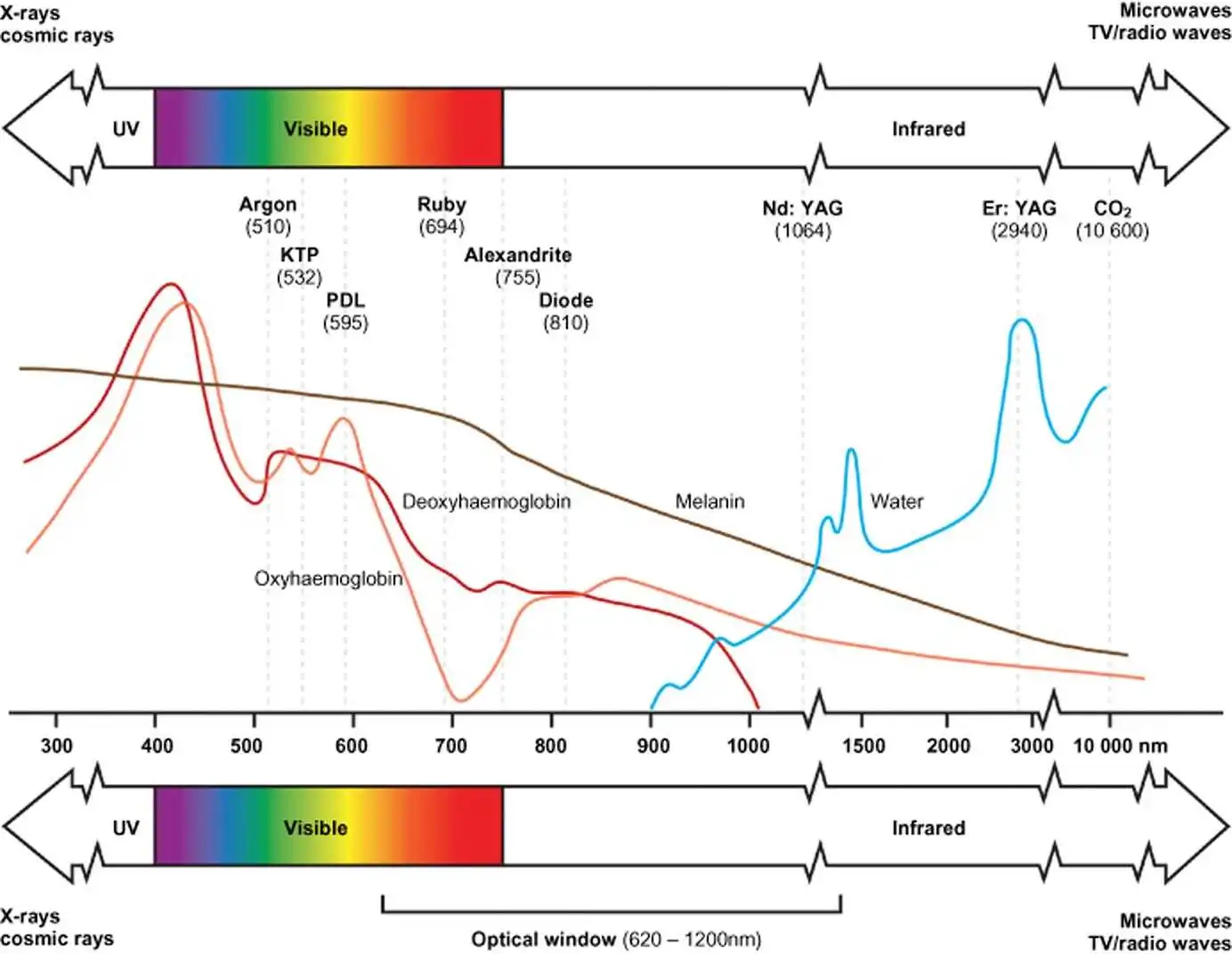 Melasma, acne scars, and uneven pigmentation require even more caution, as these conditions already involve overactive melanocytes. Picosecond lasers, Nd:YAG 1064nm, and non-ablative fractional devices are typically preferred because they generate less heat and minimize the risk of worsening discoloration. Conversely, high-heat lasers or IPL devices can easily trigger pigment rebounds in darker Fitzpatrick types, making proper device selection essential for safety and success.
Ultimately, understanding the Fitzpatrick scale allows aesthetic professionals to customize energy settings, choose the right wavelength, and balance efficacy with safety for every skin tone. By tailoring treatment based on melanin levels, providers ensure predictable results, reduce downtime, and protect the skin from unwanted pigment changes. Whether treating fine lines, pigmentation, acne scarring, or unwanted hair, knowing your Fitzpatrick skin type is the foundation of safe, effective laser therapy. For more information on Fitzpatrick skin types and how it is important to reach out to our team on the ‘Contact Us’ page, and we will be ready to assist with any questions you may have.
Featured Products
Apolo One
PulseVive Portable
PicoVive
NanoVive
PulseVive
Get the Brochure
Download our comprehensive brochure to explore our full range of products and services.
Request PDF