The Connection Between Diet and Skin Health
The skin is often a reflection of what happens inside the body. While skincare products and treatments play an important role in maintaining healthy skin, diet and nutrition are equally critical. What you eat can influence acne, aging, inflammation, and overall skin appearance. One of the most debated dietary factors in skincare is sugar. Many people wonder: can eating too much sugar really harm your skin? Scientific evidence increasingly suggests that it can.
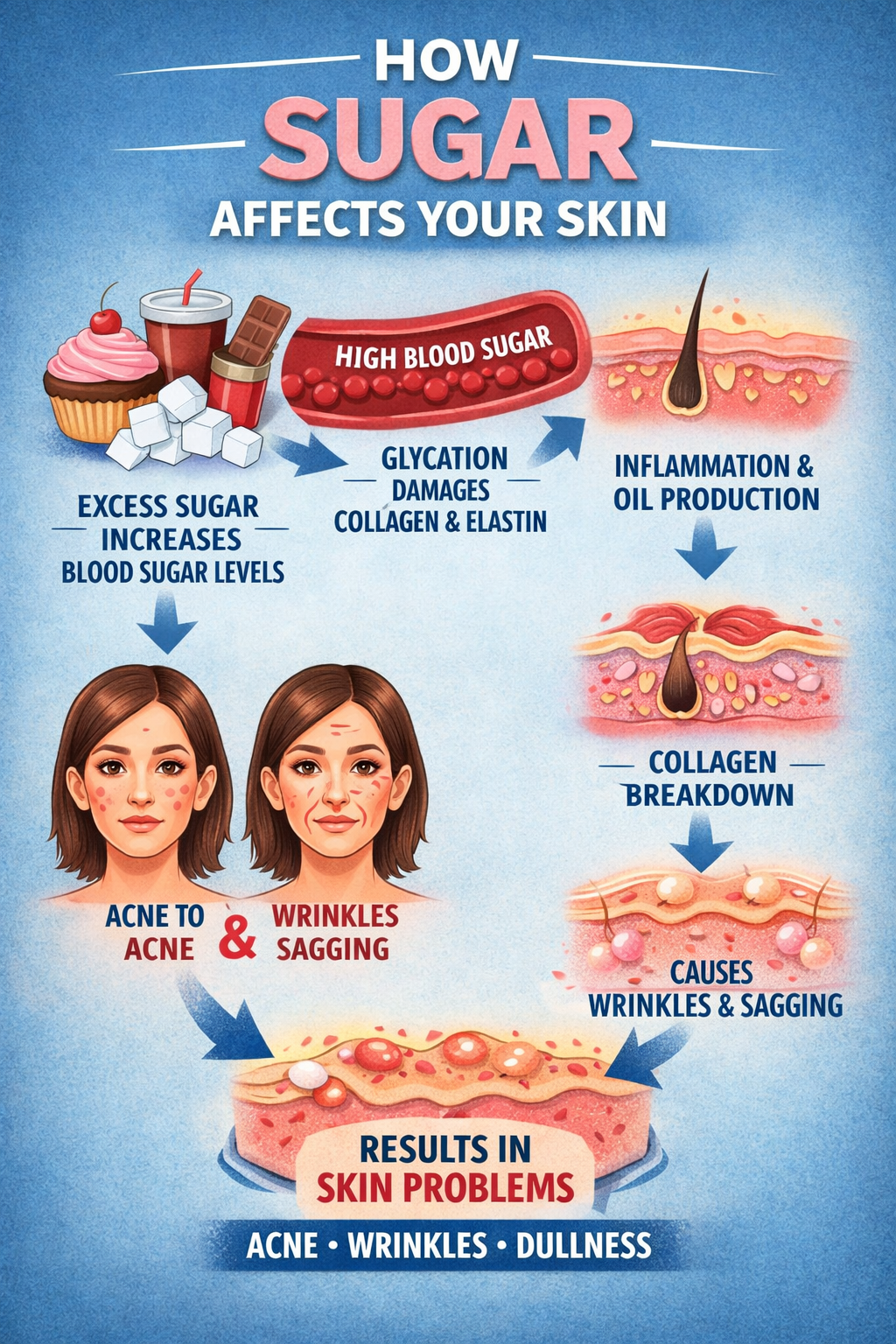
Sugar and Skin
Sugar affects the skin through a process called glycation. When you consume high amounts of sugar, glucose molecules attach to proteins in the body, including collagen and elastin. This reaction forms advanced glycation end products (AGEs), which damage these structural proteins. Collagen and elastin are responsible for keeping the skin firm, smooth, and elastic, so when they become damaged, the skin can lose its youthful appearance. Over time, excessive sugar intake may contribute to wrinkles, sagging, and dull-looking skin.
High sugar consumption can also trigger inflammation in the body. Chronic inflammation is linked to many skin conditions, including acne, eczema, psoriasis, and rosacea. Diets rich in sugary foods and refined carbohydrates can cause blood sugar spikes, leading to increased insulin levels. Elevated insulin can stimulate oil production and androgen hormones, which may worsen acne breakouts and clogged pores. This is why some people notice clearer skin when they reduce sugary snacks, sodas, and processed foods.
In addition to acne and premature aging, too much sugar can affect the skin’s ability to heal and maintain its barrier function. High blood sugar levels can impair circulation and slow down the delivery of nutrients and oxygen to the skin. This may result in slower wound healing, increased dryness, and a weakened skin barrier that is more prone to irritation and environmental damage. Over time, this can make the skin appear tired, dehydrated, and less resilient.
Nutrition plays a crucial role in supporting healthy skin. A balanced diet rich in antioxidants, vitamins, minerals, healthy fats, and protein helps protect the skin from oxidative stress and environmental damage. Foods such as fruits, vegetables, whole grains, nuts, seeds, fatty fish, and lean proteins provide essential nutrients that support collagen production, hydration, and skin repair. Drinking enough water and limiting processed foods can further improve skin clarity and overall complexion.
In conclusion, eating too much sugar can harm your skin by accelerating aging, increasing inflammation, worsening acne, and weakening the skin’s protective barrier. While occasional treats are part of a balanced lifestyle, consistently high sugar intake may negatively impact skin health over time. By choosing nutrient-dense foods and moderating sugar consumption, you can support healthy, glowing skin from the inside out.
Featured Products
PulseVive Portable
PicoVive
NanoVive
PulseVive
PrimaVive
Get the Brochure
Download our comprehensive brochure to explore our full range of products and services.
Request PDF