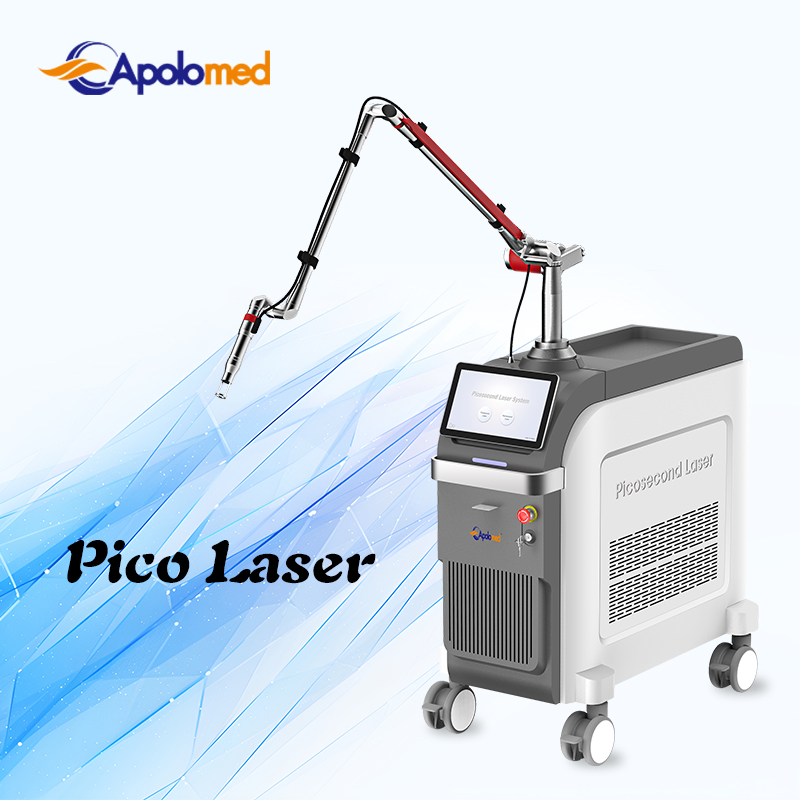
You can remove your vibrant, multi-colored tattoo. Advanced technology makes this complex process achievable. The tattoo removal market's rapid growth reflects this increasing demand.
Success requires a powerful tool like a Picosecond ND YAG Laser. It must target each ink pigment effectively. This process shatters ink particles with minimal heat, protecting your skin.
The Challenge of Removing Colorful Tattoos
Removing a colorful tattoo is more complex than removing a simple black one. Each ink color in your tattoo presents a unique challenge for laser technology.
Why Different Ink Colors Respond Differently
Your tattoo's colors absorb light differently. The science is based on light absorption. A laser shatters ink by targeting a pigment with a specific wavelength of light. Black ink absorbs nearly all laser wavelengths, making it the easiest to remove. Other colors require more specific targeting.
● Black and Dark Blue Inks: Respond best to a 1064nm wavelength.
● Red and Orange Inks: Absorb a 532nm wavelength effectively.
● Green and Blue Inks: Need special wavelengths to break them down.
A versatile device like a Picosecond ND YAG Laser often includes multiple wavelengths to treat a spectrum of colors in one system.
The Most Resistant Tattoo Inks
You will find that some colors are tougher to erase than others. White, yellow, blue, and green inks are famously stubborn. White ink reflects laser light instead of absorbing it, making it very difficult to shatter. The chemical makeup of some inks, such as those containing titanium dioxide, also resists laser treatment. These additives can make bright colors like blues and greens require more sessions for complete clearance.
Understanding Paradoxical Ink Darkening
In some cases, your tattoo ink may darken before it gets lighter. This is called paradoxical ink darkening. It happens when laser energy causes a chemical reaction in the ink's metal components, like iron oxides. The intense heat can change the pigment's structure, making it appear darker.
Note: This reaction is more common with older cosmetic tattoos containing flesh tones, white, or red inks. Thankfully, studies show it is less of a concern with modern microblading pigments.
The 2025 Gold Standard: Technology and Process
The technology for tattoo removal has advanced significantly. In 2025, the gold standard involves powerful lasers and a clear, professional process. You can achieve clear skin with the right tools and an expert provider.
Picosecond vs. Nanosecond Lasers
You will encounter two main types of lasers for tattoo removal: picosecond and nanosecond. The key difference is the speed of the laser's energy pulse. Picosecond lasers deliver energy in trillionths of a second. Nanosecond lasers deliver energy in billionths of a second. This speed makes a huge difference in how effectively the laser shatters ink particles.
Picosecond lasers use ultra-short pulses to create a powerful photoacoustic effect. This effect is like a shockwave that breaks ink into tiny, dust-like particles. Your body's immune system can then clear these smaller particles more easily. Nanosecond lasers rely more on photothermal energy, which heats the ink particles to break them down. This process creates larger particles and generates more heat, which can increase the risk of skin damage.
The efficiency of picosecond technology means you need fewer treatments. This saves you time and discomfort.
| Laser Type | Average Sessions for Tattoo Removal |
|---|---|
| Picosecond | 4–6 |
| Nanosecond | 6–10 |
Ultimately, picosecond lasers offer a faster path to clear skin with a lower risk of side effects.
The Role of a Picosecond ND YAG Laser
A Picosecond ND YAG Laser is a premier tool for removing multi-colored tattoos. This advanced system combines the power of picosecond technology with the versatility of multiple wavelengths. It can switch between different pulse modes and wavelengths, allowing a specialist to target a wide range of ink colors and skin types within a single device.
The benefits of this technology are significant:
● Efficient Ink Shattering: The ultra-short pulses break down ink more effectively through a photoacoustic effect, leading to faster clearance.
● Reduced Tissue Damage: These lasers generate less heat. This minimizes collateral damage to the surrounding skin, reducing the risk of scarring.
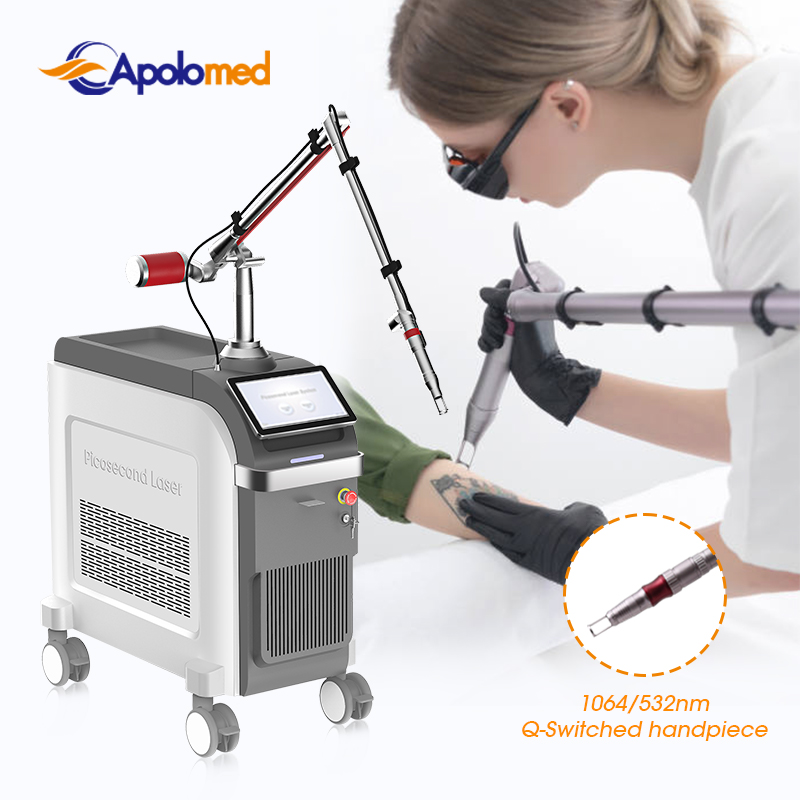
● Versatility: A dual-wavelength system can tackle different colors. For example, the 1064nm wavelength is ideal for black ink, while the 532nm wavelength effectively targets red and yellow inks.
Studies confirm the effectiveness of this technology. One prospective study showed that a Picosecond ND YAG Laser provided excellent results on black tattoos after just two sessions. Another study found that this type of laser achieved 92% clearance for black ink and 80% clearance for red ink, showing its power against both dark and vibrant pigments.
Matching Wavelengths to Your Tattoo's Colors
Your provider must match the laser wavelength to your tattoo's specific colors. Each color absorbs a different wavelength of light. Using the wrong one is ineffective and can damage your skin.
● Black and Dark Inks: The 1064nm wavelength is the most effective choice for black ink. It is also great for dark blue and purple pigments.
● Red and Warm-Toned Inks: The 532nm wavelength is the gold standard for removing red ink. It also works well on orange, yellow, and brown.
● Blue and Green Inks: These stubborn colors require specific wavelengths, often 755nm (Alexandrite) or 694nm (Ruby), to break them down effectively.
A state-of-the-art device like a Picosecond ND YAG Laser often comes equipped with 1064nm and 532nm handpieces. This allows your technician to treat the most common tattoo colors with one machine, ensuring a comprehensive and customized treatment.
Post time: Dec-11-2025


